Friday, May 10, 2024

The Method -- Part II

Garden Plants in Waiting
The Method that I employ to prepare a backyard of clay soil for extensive gardening efforts involves a number of steps. This method, which I developed over a number of years, is pulled from personal gardening experience and an understanding of what works in the garden and what doesn't. This method was also pulled from the experience of watching others and the style that they employed.

I also strongly believe that the method that commercial farmers use is a big recipe for success. Commercial tomato farmers concentrate on one crop and one crop only for the most part: the variety of tomato known as the "processing tomato." Today's processing tomatoes resemble pear-shaped tomato fruit, also known as "roma."

It wasn't always this way. In fact, many heirloom tomatoes grown today once did double duty as processing tomatoes from a different era. Campbell's 1327 comes to mind as an example. This was the variety that was once widely grown for Campbell's famous Tomato Condensed Soups. There are others.

Garden Area
Clearing the garden area of weeds with a lawn mower, weed eater and a normal shovel to dig out the pesky Mallow is the first step in the process. The second step is a "first chop" with the Mantis Rototiller. These steps, which I outlined in a previous blog posting, end with the result of four to six inches of loose soil. It's a good start. But I want more. The third step that I employ will wear a gardener out. It can take hours to achieve the end result. It's a step, however, that helps to achieve the results that I want.

Four to six inches of loose clay soil isn't enough. I want a deeper cut. The only way for me to accomplish this cut is to employ an old fashioned shovel and get to work. The shovel is used to dig up every square inch of garden area. This "cut" into the garden soil brings up big chunks of soft clay soil. Those chunks are turned over. By the time I'm done with this step, the garden soil looks like row after row of large, brown marshmallows. It also results in 12-16 inches of loose garden soil over the entire garden area. Every bit of it, from one side to the other, is lifted up and turned over.

Employing this method also tells me just how healthy my clay soil really is. Garden soil should be alive with living organisms. This includes worms, both large and small. Turning the soil over and breaking up clay chunks with the shovel also allows worms to escape and dig deeper into the soil that I have just dug them out of. Which is exactly what I want them to do. Those big earthworms and many smaller wrigglers are exactly what I want in my garden soil. I don't want to commit the crime of chopping them up with the Mantis.

Chunky Clay "Marshmallows"
I will not lie to you. This step is not easy on the body nor is it quick garden work. It normally takes me three to four hours of pushing, pulling and grunting to accomplish the task. If that shovel does not easily slide into the soil below, I use the power of my feet and legs until it gets to a depth I'm happy with. This is a routine that is employed every time that shovel is placed into the ground. The goal is the deepest cut I can get, without snapping the shovel into pieces when I turn that big, gray dirt clod over. The goal also is not snapping my back into tiny pieces either. I'm not always successful.

This is a gardening method that I learned from a friend who I put to work in my garden one year when my pesky back gave out. He grew up on a small farm in Merdead (Merced) County. I had never witnessed anyone do this before. I never forgot it either. It had never crossed my mind to do something like this. This step is not easy. I must stress this. I run into all sorts of tree roots, rocks and other obstructions with each shovel full of clay that I bring up and turn over. Yet, I do understand that it is work that must be done.

If the clay soil will not give into the efforts of me jumping up and down on a shovel, I will employ a little strategy. That garden area might need a little more water. Again, the goal is a soft, pliable clay that a shovel will slice into, not a mud pit. If 30-minutes with a garden sprinkler and a bit of a wait will accomplish this task, that is the solution that I will employ. Time isn't the issue here. Getting that soil just right is. If this process takes a day, or I have to let the soil sit overnight after watering it, I will. If I need to stop and clip away pesky roots that are the size of small tree branches OR dig out large rocks, I will do that too.

Brain Vibration Tool
Once the garden area resembles one row after another of large, brown marshmallows, it's once again time to fire up the Mantis. This is the fourth step. The Mantis is put to work chopping those big, brown clay chunks into much smaller chunks. The goal is a fine soil, but I normally do not accomplish this goal until the final step of The Method. Fortunately, the fourth step is usually a bit easier than the first chop with the rototiller.

The work still leaves me with a vibrating brain by the time the chopping work is done. Fortunately, it doesn't vibrate for nearly as long. Employing a garden rake to level out the chop and achieve a semi-level garden area also cuts down on the vibration. The fourth step in the process leaves me with anywhere from one to two feet of loose garden soil. I do my level best not to step on it. This is the step that also cuts down upon, but does not eliminate, pesky garden weeds.

The goal I had of one to two feet of loose garden soil has been achieved. But, the work isn't done yet. The next step, which is step five in The Method, is amending the soil. The amendment process is just as important. If I can accomplish this goal now, it means I won't need to fertilize the garden once all summer. It will have all the nutrient matter it needs to keep producing an assortment of vegetables all summer long.

Garden Amendment Gold
It means nightly salads of heirloom tomatoes, slices of mouthwatering cucumbers and fragrant, fresh basil and oregano. The end result also means an entire summer's worth of zucchini and crookneck squash, sliced lengthwise, brushed with olive oil, coated in salt and pepper and cooked on an outdoor grill. The end result is also processed tomato sauces and salsas, both flavored and heated by heaps of garden bell and hot peppers. One small garden can produce a winter of summer delights.

I employ two products in the amendment process: These include bags of steer manure compost and bags of pellet fertilzer from my local big box stores (Home Depot and Lowe's). Both are spread out over the soil as equally as possible before the Mantis is employed one final time.

Adding amendments to the soil however, can be a bit tricky. It is highly possible to add too much of a good thing. The amendments I add will bring three important nutrients to my garden area: Nitrogen, Phosphorus and Potassium. By adding just enough, and not one tablespoon more, you will be rewarded with an enormously productive garden. Adding too much will result in a garden that grows well, but doesn't produce nearly as much as the previous year's garden did.

Amending the Soil
I've come to learn that covering every section of the garden with at least one inch of steer manure compost does the trick. I attempted to double up on that amount one year. Bad idea. Although I always experiment in my garden, this is one experiment that went awry. The goal is to feed your garden plants. Not burn or shock them into non-production.

I do know that there are other gardeners who employ chicken manure in the garden. I'm not one of them. Never had much luck with it. Composted chicken manure is far hotter than its steer manure cousin. If you employ too much of it, which I've done, the result usually isn't something to write home about. So, I stick with the tried and true method.

After stomping on my amended garden soil to spread out anywhere from 25-30 bags of steer manure compost, I also spread out about a bag and a half of pellet fertilizer. I've used many different brands to accomplish this task. I'm not going to recommend one brand over another, but I've had the most luck with the Vigoro brand of Tomato and Vegetable food. I purchase the 3.5 lb. sacks. I spread out about a bag and a half. The remaining half bag will be used to fertilize fruit trees and bushes over the summer months.

The Goal
The final step? Step six is putting the Mantis back to work for a third and final time. The steer manure compost and pellet fertilizer is worked deeply into the soil. This final chop also takes care of the clay dirt clods that didn't quite get broken up with the second chop outlined earlier. The end result, after raking the garden area as level as I can, is a smooth and amended garden soil. The final product will be a pleasing color of rich, dark, and amended clay that crumbles when touched. It is a soil creation that is perfect for what I want because it will keep my garden plants in production all summer long. Which is the goal.

Does this mean I'm ready to start planting? HEAVENS NO! The planting process is also "involved." Not quite as involved as the gardening preparation that I've just outlined, but there is yet another "method" to this gardening madness. That outline will come next. I've got some planting to do!

Toodles!

Wednesday, May 1, 2024

The Method -- Part I

2023 Summer Garden
It is that time of the year again, isn't it? After watching a massive pile of weeds take over a once pristine gardening area, the time has come to clear it all out and make way for the new summer garden.

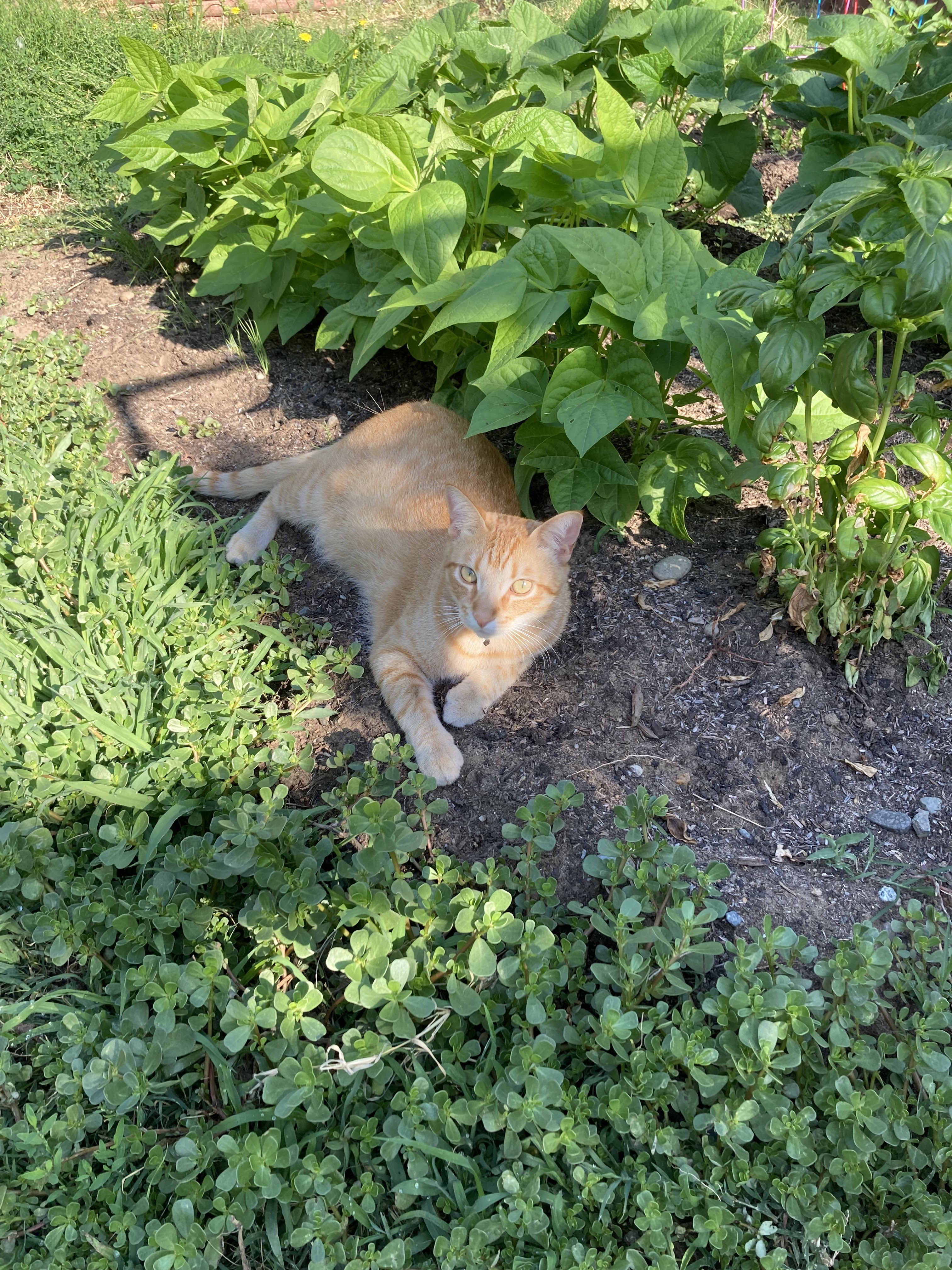
If you procrastinate with this work, as I do, the task at hand can be rather monumental I hate working in cold weather. I'd much rather stay inside, curled up with the heat brick known as Mango. The reliable rat hunter also seems to detest mud and cold as much as I do. This cat not only deters garden pests. He radiates enough heat to put a significant dent in winter heating bills.

At some point however, the gardening urge does begin to stir within me. The following missive is a method that I've developed over the past few years to prepare the backyard gardening area. I thought I would share this method of madness with you. Please do not misunderstand me, however. This is not the "right way" to prepare a gardening area. There is no "right way." Nor is there a "wrong way." It is "my way" and nothing more. Many people may find fault with this, or do things differently. That's fine by me. This is just my way of doing things and nothing more.

Rat Exterminator at Work
There was a time when I gardened extensively with raised beds that I built and maintained. Preparing raised beds for gardening use is MUCH easier. There was a point however, when I left those raised beds behind. If I was going to continue with this gardening adventure, all activity would take place the old fashioned way: in the clay dirt of a normal backyard. This forced me to develop a method that took a little more time to accomplish. But it also paid off with a unique gardening experience.

I can tell you that I have experienced a great deal of success with this method. You may experience the same type of success should you choose to emulate it. It is also a gardening or preparation method that greatly curtails the amount of weeds that pop up in the garden area. But, it does not eliminate them. The crab grass still makes its seasonal appearance. Several other "weed" varieties also seem to enjoy the garden prep and will announce their presence during the summer months. The only "weed elimination" strategy that seems to work for me is to dedicate a few minutes every morning of every day to find, locate and dig out the unwanted visitors.

Mantis Rototiller at Work
This weed elimination task isn't as difficult as it might sound. The weeds that do spring up are often quite easy to remove because they haven't had the time to develop tough and extensive root systems yet. This includes the dreaded crab grass.

I employ many tools during this method, but the biggest and best by far is the Mantis Rototiller. I consider the Mantis to be the best gardening investment I have ever made. This is the Mantis that is outfitted with the four cycle Honda engine. It is reliable. It is powerful. It starts immediately after a long and cold winter of zero activity. It cuts through heavy clay soil with ease. It also makes short work of pesky weeds with extensive root systems that have grown undisturbed through the winter months. I purchased this Mantis more than a decade ago, and it has yet to fail me.

Empty Garden Area with Weeds!
My method of garden preparation does not mean I put this tiller to work just once. It's not even used twice. It gets three or four turns in the garden area before the method of preparation is complete. I cannot imagine accomplishing this task without it, however. The Mantis doesn't replace all the hard work that must be done. But it does make it a tad easier. A turn with the Mantis will also leave your hands, arms and brains vibrating after an hour or two.

After I employ the trusty lawn mower and other garden tools to mow down a winter's worth of waste-high weeds, further weed elimination efforts take place in the garden area with the very handy and dandy weed whacker (also called a weed eater). I employ a normal shovel to dig out the tougher weeds like mallow, which also has a rather extensive and tough root system. There comes a point during this process where the garden area looks quite bare. Don't be fooled. The weeds are still there. They are just hidden by the dead material that the weed eater (whacker) and shovel efforts have already taken care of.

Mantis Tiller: Chop #1
That dead weed material isn't really dead though. In fact, it's just begging to be tilled right back into the garden area. I don't give into that weed wish. So, those chopped bits get raked out and cleaned up before I move forward. By the time I'm finished with this task, the ground is nearly bare dirt. It is at this point where I make a tough decision. Using any type of a garden tiller can be tough when the soil is dry following a dry spring. So, if it's needed, I put a sprinkler to work on that dirt patch for about 30-minutes. I let it sit overnight to let that water work its way in and help loosen the soil. This isn't always necessary. But water can play a key role in preparing the garden soil as long as it is used judiciously. Too much of anything can be a bad thing. Damp soil is the goal. Not a mud pit.

If the soil is right, it's time to put the Mantis tiller through it's first workout. This one is the toughest, on both machine and machine operator. I put it to work to till up a garden plot that hasn't been tilled for a year. That's a year's worth of soil compaction. Rows of last summer's tomato and pepper plants, cucumbers, herbs like basil, row vegetables plus walking paths tend to leave a lot of compacted debris behind. This is the big workout. The first chop usually takes the better part of an hour. The goal is a cut of at least six to eight inches in depth. This isn't all that difficult in a garden plot that has been tilled up the year before, but it still takes time and effort. This is the one workout that leaves you with vibrating hands, arms and brains.

The Dreaded Mallow
This first cut with the Mantis is the second step that I take to prepare my summer vegetable garden. Whether it's the toughest of all steps or not is a question that I will leave up to you. The six to eight inches of loose clay soil that contains plenty of compost thanks to previous gardening efforts is a good start. But, it's just that. A start. The job isn't finished. The big dig that takes place next will be outlined next in Part 2 of The Method.

Tuesday, April 23, 2024

The Survivor

The Survivor
This experience is not unique. Not by any stretch of the imagination. But it is a first for me. I've been planting and nurturing summer vegetable gardens in numerous backyards for a very long time. While I have heard stories like this before, I've never counted myself as one of the "lucky people" to receive this gift.

I can't tell you what I did. Whether it was "right" or "wrong," I do not know. It just happened. I chanced upon this "gift of gardening" while clearing out the very last portion of last summer's garden about a month ago. The section of the garden where pepper plants, both sweet bell peppers and hot varieties like the time-tested Jalapeño, are planted here. I always tear these out late because they keep producing right through fall and the first part of the coldest winter months.

Mother Nature usually delivers the "coup de grâce" or death blow to the entire garden at some point. It's usually after winter temperatures drop into a sustained freeze level. I live in a cold area of Northern California. The weather can deliver a whopper of a freeze every winter and often does. Several times. The tomato plants that I had not removed yet are normally finished off by a good freeze, and that includes the mighty pepper plants. Peppers love heat. They normally cannot stand cold winter temperatures, but some do perform better than others.
 
Imagine my surprise when I found this guy. It was located in last year's pepper bed, which contained about 25 different pepper plants. There was nothing special about this guy. It is your normal, ordinary Jalapeño pepper plant. It produced about the same number of spicy peppers that the two other Jalapeno plants did. However, unlike the other two, this one was not brown, barren, twig-like, or dead. For some strange reason it survived. No other garden plant did. Every single other plant in my expansive gardens kicked the bucket over the winter. Which is a normal development for most plants in a summer vegetable garden. But not this one.
 
New Growth Emerging
When I discovered it, in fact, it was in the process of sending out new growth through extensive vines that had intertwined with the branches of other peppers and the tomato cages I employ to support these plants in the garden area. Hidden by tall weeds and two dozen or so dead pepper plants, here was this one lone survivor. It was not planted anywhere near a heat source. It received no protection whatsoever. It just survived. For some reason, it decided not to give up the ghost. As for the two other Jalapeño varieties that were planted just inches away, they were long gone. They had become a collection of brown and crispy twigs.
 
Color me amazed. This is the first time I've encountered anything quite like this. But I did not let it stop me in that day's quest of tearing out the old garden to make way for the new one that will soon be planted. I nearly pulled this survivor out of the ground and tossed it into the large and expanding pile of dead pepper plants and various weeds. But I was struck by an epiphany. I've never encountered anything like this before. Why should I take action to kill a solid garden producer that obviously isn't quite done producing yet?
 
It would still be forced to survive a brutal haircut. Which it did receive. All of those long vines with new green growth were pruned away and tossed on the growing refuse pile. Those vines had grown into other plants that were dead. Plus, I had to remove the tomato cage support. So, if this mighty garden survivor was going to see another growing season, it would be forced to survive some fairly brutal treatment. It received a solid haircut, just like you see pictured above.
 
2023 Pepper Garden
Survivor is Front and Far Left
The "Survivor" refused to perish. Even in the face of the abuse that I just outlined. It lived through the brutal destruction and clearing of last year's pepper garden. It survived my onslaught of pulling and tearing out every last weed that had grown around it. It even took on the brutal haircut I delivered and laughed it off. Today, the survivor stands tall. The base of this plant looks like a small tree stump. It's gnarled and carries a none-too-pleasing brown color. Yet, green growth is springing forth from the survivor as I type this blog missive. It is the Jalapeño pepper plant that refuses to die.
 
I did make sure to show it a little bit of love this past weekend. As I chopped, mowed and chopped down even more spring weeds with a furious purpose, I dragged the garden hose over to the survivor. It received a slow drip of nourishing water, plus a sprinkling of garden fertilizer sprinkled at the base. It has reacted with a pleasing spurt of green growth over every section and branch that was not pruned away.
 
The Survivor may have survived the first onslaught of summer garden prep. But the abuse isn't over yet. It still may not make it. It will be required to survive the absolute injustice of whirling blades from the Mantis Rototiller that I put to work in the garden area every spring. I will make every effort to spare The Survivor from those churning blades that cut up the soil, but who knows how it will react.
 
Rat Exterminator on Patrol
I do consume my fair share of Jalapeño peppers from the garden. Sometimes I seed them. Sometimes I do not. They are chopped and placed into a collection of summer dishes such as soups, stews and even the occassional summer turkey burger. Even more find their way into the tomato salsas and sauces that I create from the abundance of a summer vegetable garden. Neighbors far and wide can expect a bounty of Jalapeño peppers. Provided they want them.
 
What kind of production can I expect from The Survivor? I'm not sure. I've never encountered this type of good luck charm before. But, provided it survives, I will keep my eye on its progress. Hopefully, it will provide a bounty of peppers. Just as it did last summer. Time will tell.

Saturday, September 2, 2023

Ain't That Pretty?

Cherry Tomato Garden
This can be a favorite time of year for tomato growers like me and many others. The tomato varieties planted throughout the garden are starting to show signs of winding down, except for a few selected varieies. If you happen to be fan of cherry tomatoes, which I am a big fan of, this is an important time of year. Cherry tomatoes come in handy for one singular, but important, event.

I'd like to take credit for this idea, but I can't. It's something that I spotted years ago while attending a UC Berkeley Football game at Memorial Stadium in Berkeley. This was the day and age when CSU-Fresno native Jeff Tedford was calling plays for the Bears, plus leading them to some very impressive winning seasons. It was the day and age of Aaron Rodgers at QB for Cal and an unknown freshman at RB named Marshawn Lynch.

It was at this game, seated near the student section, where I spotted a young lady who had managed to bring her own football snack to the game. It's the type of snack that eagle-eyed stadium staff didn't dare try to intercept and throw out. Why? Because it was the most inoffensive home snack that a young fan could bring into a game. It was nothing more than an ordinary sandwich bag stuffed with bright red cherry tomatoes.

College Football Snack
It was, at that point, where I started to kick myself. Hard. I had a garden full of delicious, home-grown cherry tomatoes at home. Yet, it hadn't even crossed my mind to harvest just a few of those delicious, home-grown wonders and bring them to the confines of Memorial Stadium. This one event took place nearly two decades ago, yet I have never forgotten it. What an outstanding and smart idea. Why didn't I think of that?

So, to celebrate the start of each college football season, I've enforced a cardinal rule of harvesting dozens of ripe tomatoes from as many cherry tomato plants that I can. This is the best college football snack that money can buy, and it doesn't cost a dime. It's also a lot healthier for the heart and mind than a hot dog and a beer.

My intent was to plant three cherry tomato varieties this gardening season: Pink Ping Pong, Black Cherry and Sun Sugar. Unfortunately, the plan was foiled slightly when the plant labeled Pink Ping Pong began to churn out monster-sized, pink-colored tomatoes. Not that I'm complaining. There's nothing wrong with monster-sized heirloom tomatoes that turn a pleasant shade of pink. It's just not the cherry snack that I had been expecting.

Cherry Plant Garden
The other two varieties, however, were as advertised. Both varieties grew like champions during the summer. Both delivered enough fruit for me to harvest and give away to anyone who wanted a sack of brown and orange cherry-colored varieties. Fortunately, I live right next door to a home filled with children who can't get enough of them. So, finding a willing taker wasn't all that difficult.

Yet, with the start of each college football season, I will always be reminded of that young college student that I spotted sitting nearby in Memorial Stadium. I will never forget her rather good idea. Many people will celebrate the start of college football season with a barbecue and maybe a favorite fermented beverage or three. I swore off the fermented beverages some years ago. So, for me at least, it's a chilled ice water with a splash of lemon juice. Plus a never-ending selection of brightly colored cherry tomato favorites from the summer garden.

Is this a healthy snack? Yes, indeed it is. But it's more than that to me. It's the memory of that game at Memorial Stadium years ago. It's the memory of a really good idea that never once crossed my mind. I will never forget it.

Go DOGS!
The fact that Jeff Tedford is still coaching college football helps a great deal. Tedford, whom I watched sling the ball during my days at Fresno State, is still churning out great quarterbacks and winning college teams. I'm not sure how far the Bulldogs will go this season. But watching the Bulldogs win the opener against the Boilermakers AT Purdue 39-35 earlier today, was nearly as satisfying as munching on a breakfast snack of freshly harvested cherry tomatoes.

Go Dogs!

Sunday, August 27, 2023

The Most Interesting Tomato Plant of the Month! August 2023

Weekend Haul (Partial)
I don't always grow tomato plants. Wait, that's a lie. I've been growing tomato plants every summer for 25-years straight. So, I guess my message to you should be: Grow Tomatoes, My Friends.

The photo to your immediate right? That represents my big weekend activity for the month of August. I'm either collecting ripe tomatoes to make gobs upon gobs of canned tomato sauce (with the bite of Jalapeño peppers I might add), OR I'm throwing them into bags and BEGGING my neighbors to take them.

This is the moment in August where heirloom tomato production is positively off the hook. It's not over yet. There are three times as many green tomatoes on the plants that I harvested from today than those that show the color of absolute peak heirloom ripeness. This means another month, or even two, of heirloom tomato harvests. This is, of course, provided the weather holds out.

Cold nights can screw up an heirloom tomato harvest. The tomatoes still turn a pleasing color of red, pink, yellow, orange or whatever variety you are choosing to grow. But sustained cool temperatures at night can play havoc with that heirloom taste.

Tomato of the Month
The nights, unfortunately, have been getting a bit cooler recently. It's not cold yet. But it's near the end of August, which means cold weather isn't very far off. It hasn't affected the taste yet. Today's serving of the giant pink monsters known as Marianna's Peace (MP) were positively off the hook. But, I do worry.

Although I could easily give the August title to MP, or any one of a number of other heirloom producers, I've saved this singular honor for a new variety that popped up in my garden this year. It's called Bread and Salt. It has been an absolute pleasure to grow and the production has been rather outstanding.

This is not a new variety. Not by any stretch of the imagination. It is somewhat new to the United States. But, in the heart of Mother Russia, this variety is well known. I can only tell you that the seeds for this variety did, in fact, come from Russia. I'm not sure exactly where, since this variety is apparently grown all over the Eastern European continent. I'm not at all surprised.

Bread and Salt
Bread and Salt is what tomato growers call an "oxheart" variety. It is a very large oxheart variety. How big? As big as my big, fat hand. Perhaps even bigger. I was blessed with two Bread and Salt starter plants this year. I gave one away and planted the other. I didn't give it much thought beyond that. I didn't know what to expect out of this variety because it's not one I had been expecting to receive as a starter plant.

This heirloom tomato variety may be called Bread and Salt. But it doesn't taste like that. The name, however, is symbolic. It is a Russian custom to provide gifts of bread and salt, which acts as a symbol of good health and fortune. A Bread and Salt variety grown in any fresh tomato garden is certainly going to bring those very good benefits. This is one good tomato. It's meaty. It's tasty. That zing of tartness is in every bite.

This plant doesn't get very large. Maybe four feet tall? That's the size of many standard determinate varieties. There's nothing wrong with determinate varieties. Any vine-ripened tomato is good eating. But most determinate varieties aren't worth writing home about in my opinion. Bread and Salt is different. My plant started producing in mid July and hasn't stopped. New tomatoes continue to form with every passing week, which means this plant won't play out until Mother Nature puts a stop to all summer garden production with one of her patented cold snaps.

Bread and Salt Tomato
I made sure to include a few ripened Bread and Salt whoppers in my canned tomato sauce creations this year. Bread and Salt tomatoes have found their way into more garden salads than I can count. I give as much of them away as I possibly can, without wearing out my welcome as a "good" neighbor. It's just one of those reliable heirloom varieties that you can count upon in any summer vegetable garden.

I can't make any promises, but it may show up in another future garden at some point. It certainly deserves another chance or two after the show this variety put on this year. I just thought you should know about it. It is, without a doubt, the most interesting tomato plant of the month!

Sunday, August 6, 2023

This Ain't No Ripple!

Ripple!
It is just like a fine wine. And I can't stop drinking it. It's smooth. It's tasty. It goes down the gullet just right. This ain't no Ripple! This is a Château Lafite Rothschild or something similar. I have no idea what a 
Château Lafite Rothschild tastes like. But Google tells me this is a fine wine. It ain't no Ripple!

I am, of course, being a tad facetious. I don't drink anymore and even when I did drink, my first choice was not wine. And it certainly wasn't Ripple! That was my mother's wine of choice. Ripple was big in the 1970's. It was produced by E&J Gallo in Modesto, which just happens to be my home town. It is described as a "low end fortified wine." That means CHEAP. Which means it always had a prime spot in my mother's refrigerator.

It didn't last long. Mom loved her Ripple. She wasn't alone. So did a lot of people. This list includes Fred Sanford (Redd Fox) of "Sanford and Son" fame. Fred could never get enough Ripple. He was famous with combining E&J Gallo's favorite concoction with champagne. It was a creation he dubbed "Champipple."

Ripple!
I bring this admission to you because, I will admit, that I have been enjoying the table grape alternative to Ripple wine. These table grapes have been on sale at my local supermarket. They are priced at 98-cents per pound. That's my kinda price. I love table grapes. I love cheap table grapes even more. So, every four to five days I find a reason to visit my store of choice to pick up another 4-5 pounds of cheap red or green, Ripple type, table grapes.

Are they great table grapes? Of course not! They are kinda sweet and kinda crunchy. They're also cheap! Good enough for me. But, I had forgotten about the "fine wine" of table grapes that I planted and grew long ago. It's just been so long that I had forgotten about that signature taste. Not anymore. I am extremely fortunate.

Thanks to an extraordinarily nice lady who is a member of the Sacramento Chapter of the California Rare Fruit Growers (CRFG), I am once again enjoying the "fine wine" of CA table grape production.

Diamond Muscat Grapes
You will not find these grapes in your local store. You  probably will not find them at a farmer's market. You will find these types of special grapes growing in selected California backyards, and I am one of those fortunate few who will get to enjoy and savor that special taste again.

I had forgotten about these signature table grape tastes. Oh my!

The first selection I would be gifted with is a variety that I grew at one time, but also had to leave behind (divorce). I've never forgotten about the Diamond Muscat. I even wrote about this variety once, singing its praises. This was another "impulse purchase" on my part. It would turn out to be the greatest table grape that I would ever plant, harvest from and eat.

Diamond Muscat Vine
The Diamond Muscat is one excellent table grape. It has been a decade since I last tasted one. Thanks to a wonderful gift that came out of the blue, I get to sample seven pounds of them. Seven pounds of Diamond Muscat grapes may seem like a lot to some people. It probably is to most. But for someone as table-grape-obsessed as I am, seven pounds of Diamond Muscat grapes is a "snack."

If the gift from this lady had ended with a full box of Diamond Muscat grapes, I would be so very grateful. But, it didn't end there. Oh yes, there's more! This is a table grape that I did not have previous experience with. Yet, I can tell you, without a doubt, this one is also very, very good.

It is called Summer Royal. It is known as a Thomcord type of table grape. Introduced by the USDA Agricultural Research Station in Fresno in 1999, this is one fine grape variety to snack on. I had never tasted it before. Yet, if I ever get the chance to plant another vineyard again in my lifetime, the Summer Royal will be part of that list.

Summer Royal Thomcord
So, which table grape variety is better? Diamond Muscat or Summer Royal? I can't make that decision. I can only tell you that I am enjoying both of them. What a nice gift for a fresh fruit afficianado to enjoy. Thank you kindly, my very special friend.

So, there you have it. No more Ripple-type table grapes for me! At least for a short while, I get to snack on a bit of home-grown heaven.

Sunday, July 2, 2023

Tomato Plant of the Month! June Edition!

DYING Tomato Plant
The summer of 2023 has arrived. Grow tomatoes, my friends. Although this represents the "plant of the month" that is growing in the yard of the Gullible Gardener, this is nothing to celebrate. Because, as you might notice to your immediate right, this tomato plant is DYING.

DYING? Wait! Are you sure? The Gullible Gardener doesn't grow or plant tomato plants that DIE. Something ain't quite right here. The Gullible Gardener provides advice to other, younger gardeners, who are killing off plants left and right. The Gullible Gardener does not suffer this misfortune.

The Gullible Gardener learned how to garden from the likes of Farmer Fred Hoffman! He drank in the knowledge provided by nursery owners such as Don Shor at Redwood Barn Nursery in Davis and Angela Pratt of Digging Bliss and Plant Foundry Nursery in Sacramento! Feats of the Gullible Gardener have been highlighted and lauded by the likes of former Sacramento Bee Garden Editors and writers by the names of Dan Vierra, Pat Rubin and Debbie Arrington!

Healthy Tomato Plants!
This is what the tomato garden of the Gullible Gardener should look like! Green! Lush! Healthy! Loaded with tomatoes! The Gullible Gardener does not suffer disasters like this! Those are reserved for "the others." Yet, the photos do not lie. The tomato plant labeled as "Chef's Choice Bi-Color Hybrid" is kicking the proverbial tomato bucket. How on God's Green Earth could this happen to someone with a mouth as big as the Gullible Gardener?

Am I bummed? Not just bummed! More like completely frazzled! Beside myself! I don't kill tomato plants. Ever. Well, that is somewhat of a lie. At one time I would kill my fair share of them. A result that normally took place after I tried something extremely stupid. But, I stopped doing that years ago. Well, kind of.

Tomatoes I Will Never Taste
I decided to write about this rather unfortunate experience after looking some distressing news from another long-time gardener. She is dealing with her own garden maladies at the moment. I know exactly how this gardener feels. This just does not happen to us! To others? Yes! To us? Absolutely NOT! Life ain't fair.

I could ask for help and advice on a Facebook Gardening forum that I troll regularly. But that's an exercise in futility. It will invite some rather odd and conflicting advice. Some of those helpful suggestions are sure to include the following:

-Spray it with Epsom Salts!
-Dump some fertlizer on it!
-Spray it with Lysol!
-Liquid Viagra!
-Dawn dish soap and table scraps!

Pass. I do have some suspicions on why this might be taking place. I have noticed that Bandit the Border Collie has taken quite the liking to this plant and has demonstrated that love by "watering it" perhaps a little too often. Before you can utter the two words of "that's disgusting," I'd much rather he choose the tomato plant instead of the side of my bed.

Bandit the Border Collie
So, I did subject this dying plant to a bit of drip therapy from the garden hose last night. About six hours worth of a slow drip. I was hoping that might lead to some improvement. Alas, it's still acting like an unhappy limp noodle. An unhappy limp noodle, I might add, that is positively LOADED with early production. I like to count the tomatoes forming up on my tomato plants because I'm certifiably insane.

So, you might have noticed that the posting for the June Edition of the "Tomato Plant of the Month" is two days late. That could be it to, I suppose. I'm two days late and multiple brain cells short. But, it just goes to show that garden maladies can strike at any place and any time. Even a garden goober who writes under the pen name of the Gullible Gardener.

<b>The Countdown IS On!</b>

HEAT BRICKS! It's January. It's COLD outside. If the high winds aren't whipping all the warmth from your gardening soul at the ...