Showing posts with label Weeds. Show all posts

Monday, June 17, 2024

Ozempic Sucks, Plus Other Garden News

Vegetable Garden in Early May
This is a blog about vegetable gardening. It will always be about vegetable gardening. That is the main subject. The main idea. It is why I write these things down. However, I reserve my right to digress from time to time to take in other areas. Like this one: Ozempic is a horrible medication. I have lived with those daily injections for three weeks. I cannot begin to describe this horrible experience. It is one reason as to why I haven't updated this blog recently.

I am not about to describe the side effects from this medication. Many of them are listed online. You can read it for yourself. I've experienced all of them, plus others that are not described in detail as they probably should be. This has been one terrible trip. However, I have come to the decision that it is simply not worth it. No more Ozempic. Ever. I will let Diabetes win.

Rant Over. Back to the garden. I promise.

Vegetable Garden in June
This is the state of the 2024 summer vegetable garden. It is the "progress so far" report between plant out and the first month of garden growth. The picture above right represents the vegetable garden just after every last starter plant and seed was set into the prepared beds. That's 30-tomato plants, six hot pepper plants (including The Survivor), 15 sweet or bell pepper plants, three tiny basil plant starters plus one row of Sumter cucumber seed and a separate row of two different types of bush bean seed.

The three or four squash starters that I had kept around would go into another nearby bed that would not be prepped for another week or two. I'm still attempting to locate some additional starter plants for this bed, but I don't think tomatoes will be one of the choices. 30 tomato plants will be quite enough. Or, perhaps too much. It all depends upon your state of mind.

The second photo, located above left, is the state of the garden in June. This photo was taken in the same spot as the first photo was. It was just taken 30-days later, June 3rd to be exact. The tomato plants then, which are about twice this size now in mid June, all got off to a great start. There was one exception to this fantastic start. It was a plant that Bandit the Border Collie paid a wee bit too much attention too. It has since recovered from this Border Collie attention and is setting a terrific early crop.

Purslane With Peppers
No, I am not about to tell you the kind of attention that Bandit paid to this particular starter plant. It's not the kind of attention that would normally be considered to be helpful. Although, it just might have been based upon the number of blossoms that this plant in question is putting out this June. It appears to be quite happy!

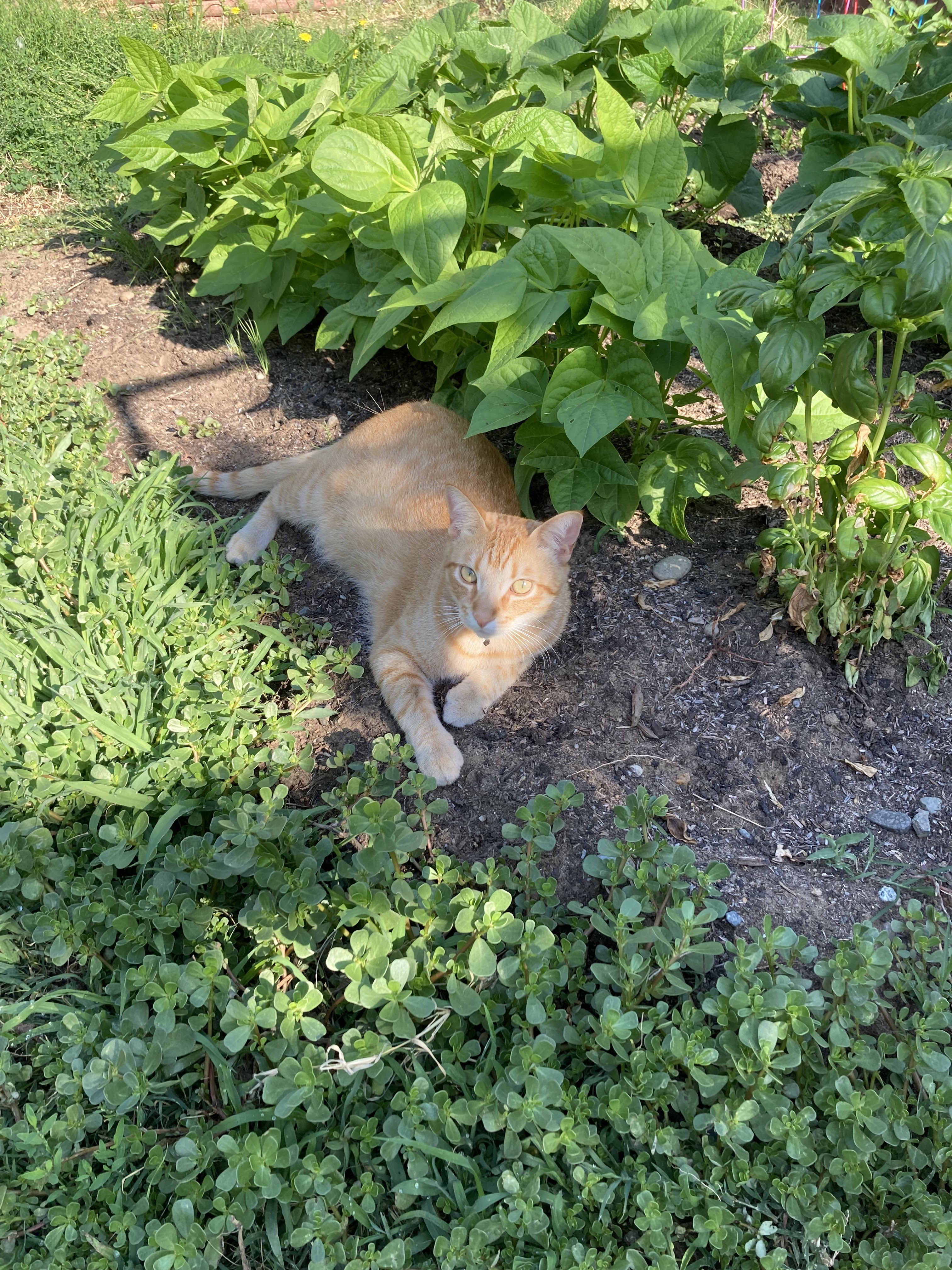
The orange garden protector known as Mango the Magnificent is back on the job once again. It's hist job to deter the garden pests that come to visit late at night, hoping to filch a snack or two. Despite suffering some problems with his back legs over a long and cold winter, it hasn't deterred or affected his ability to patrol the garden rows at night, or quietly stand guard in spots around the yard that critters have used in the past to gain garden access.

One of the biggest problems so far has been weeds and weed control. The spring garden pest known as Purslane is once again putting on a terrific show in the garden. Yes, Purslane is reportedly edible. Reportedly. However, I am not the "forager" type of backyard gardener. With the exception of a volunteer grapevine that is poised to deliver a massive amount of grapes later this summer, I tend to stick with what I planted.

This means I avoid the Purslane. Yes, I understand Purslane is edible. The University of Wisconsin-Madison Horticulture Department goes a step further by proclaiming the following: It is considered quite nutritious because it is unusually high in omega-3 fatty acids (found mostly in fish and flax seeds) and contains significant amounts of vitamins A and C, as well as calcium, iron, magnesium and potassium and antioxidants.

Weeding Out the Purslane
However, I still did not plant this. I'm not quite ready to forage for something I didn't plant. Unless it's a wild green grape. Which, I must admit, is pretty darn good.

At some point, when my appetite for any type of food returns (another fine side effect that I am suffering from), I will actually get to enjoy the fruits that this garden will eventually produce. I hope that appetite does return. Because the day of extreme garden production isn't all that far off.

I have implemented a few changes in this year's garden. Most of the changes deal with water. All gardens need this vital resource. However, the changes I have implemented this year have either resulted in some mildly impressive growth and early fruit sets, OR, it's just "one of those years." I appear to be blessed. Time will tell.

Wednesday, May 1, 2024

The Method -- Part I

2023 Summer Garden
It is that time of the year again, isn't it? After watching a massive pile of weeds take over a once pristine gardening area, the time has come to clear it all out and make way for the new summer garden.

If you procrastinate with this work, as I do, the task at hand can be rather monumental I hate working in cold weather. I'd much rather stay inside, curled up with the heat brick known as Mango. The reliable rat hunter also seems to detest mud and cold as much as I do. This cat not only deters garden pests. He radiates enough heat to put a significant dent in winter heating bills.

At some point however, the gardening urge does begin to stir within me. The following missive is a method that I've developed over the past few years to prepare the backyard gardening area. I thought I would share this method of madness with you. Please do not misunderstand me, however. This is not the "right way" to prepare a gardening area. There is no "right way." Nor is there a "wrong way." It is "my way" and nothing more. Many people may find fault with this, or do things differently. That's fine by me. This is just my way of doing things and nothing more.

Rat Exterminator at Work
There was a time when I gardened extensively with raised beds that I built and maintained. Preparing raised beds for gardening use is MUCH easier. There was a point however, when I left those raised beds behind. If I was going to continue with this gardening adventure, all activity would take place the old fashioned way: in the clay dirt of a normal backyard. This forced me to develop a method that took a little more time to accomplish. But it also paid off with a unique gardening experience.

I can tell you that I have experienced a great deal of success with this method. You may experience the same type of success should you choose to emulate it. It is also a gardening or preparation method that greatly curtails the amount of weeds that pop up in the garden area. But, it does not eliminate them. The crab grass still makes its seasonal appearance. Several other "weed" varieties also seem to enjoy the garden prep and will announce their presence during the summer months. The only "weed elimination" strategy that seems to work for me is to dedicate a few minutes every morning of every day to find, locate and dig out the unwanted visitors.

Mantis Rototiller at Work
This weed elimination task isn't as difficult as it might sound. The weeds that do spring up are often quite easy to remove because they haven't had the time to develop tough and extensive root systems yet. This includes the dreaded crab grass.

I employ many tools during this method, but the biggest and best by far is the Mantis Rototiller. I consider the Mantis to be the best gardening investment I have ever made. This is the Mantis that is outfitted with the four cycle Honda engine. It is reliable. It is powerful. It starts immediately after a long and cold winter of zero activity. It cuts through heavy clay soil with ease. It also makes short work of pesky weeds with extensive root systems that have grown undisturbed through the winter months. I purchased this Mantis more than a decade ago, and it has yet to fail me.

Empty Garden Area with Weeds!
My method of garden preparation does not mean I put this tiller to work just once. It's not even used twice. It gets three or four turns in the garden area before the method of preparation is complete. I cannot imagine accomplishing this task without it, however. The Mantis doesn't replace all the hard work that must be done. But it does make it a tad easier. A turn with the Mantis will also leave your hands, arms and brains vibrating after an hour or two.

After I employ the trusty lawn mower and other garden tools to mow down a winter's worth of waste-high weeds, further weed elimination efforts take place in the garden area with the very handy and dandy weed whacker (also called a weed eater). I employ a normal shovel to dig out the tougher weeds like mallow, which also has a rather extensive and tough root system. There comes a point during this process where the garden area looks quite bare. Don't be fooled. The weeds are still there. They are just hidden by the dead material that the weed eater (whacker) and shovel efforts have already taken care of.

Mantis Tiller: Chop #1
That dead weed material isn't really dead though. In fact, it's just begging to be tilled right back into the garden area. I don't give into that weed wish. So, those chopped bits get raked out and cleaned up before I move forward. By the time I'm finished with this task, the ground is nearly bare dirt. It is at this point where I make a tough decision. Using any type of a garden tiller can be tough when the soil is dry following a dry spring. So, if it's needed, I put a sprinkler to work on that dirt patch for about 30-minutes. I let it sit overnight to let that water work its way in and help loosen the soil. This isn't always necessary. But water can play a key role in preparing the garden soil as long as it is used judiciously. Too much of anything can be a bad thing. Damp soil is the goal. Not a mud pit.

If the soil is right, it's time to put the Mantis tiller through it's first workout. This one is the toughest, on both machine and machine operator. I put it to work to till up a garden plot that hasn't been tilled for a year. That's a year's worth of soil compaction. Rows of last summer's tomato and pepper plants, cucumbers, herbs like basil, row vegetables plus walking paths tend to leave a lot of compacted debris behind. This is the big workout. The first chop usually takes the better part of an hour. The goal is a cut of at least six to eight inches in depth. This isn't all that difficult in a garden plot that has been tilled up the year before, but it still takes time and effort. This is the one workout that leaves you with vibrating hands, arms and brains.

The Dreaded Mallow
This first cut with the Mantis is the second step that I take to prepare my summer vegetable garden. Whether it's the toughest of all steps or not is a question that I will leave up to you. The six to eight inches of loose clay soil that contains plenty of compost thanks to previous gardening efforts is a good start. But, it's just that. A start. The job isn't finished. The big dig that takes place next will be outlined next in Part 2 of The Method.

<b>The Countdown IS On!</b>

HEAT BRICKS! It's January. It's COLD outside. If the high winds aren't whipping all the warmth from your gardening soul at the ...