Showing posts with label Gardening. Show all posts

Monday, May 27, 2024

King Cucumber

Seed Packet: Sumter
Since when are cucumbers worth writing home about? Simple answer: When you stumble over and discover a cucumber variety that is out of this world special. It's when you make a discovery like this, the process of kicking yourself commences. Kicking yourself as in: Why didn't I plant this years ago?

I will admit that I had the chance. This special variety of cucumber arrived a decade ago as a "toss away." It's one of those special rewards that gardeners receive from seed houses when an order for $20 worth of seed product is placed. In this case, the Sumter Cucumber seeds arrived as a "freebie" from an outfit called Seeds of Change. This is during a time in recent history when Seeds of Change was in business. Sadly, it isn't any longer.

The name still exists. It was purchased by another seed outfit after the Seeds of Change business folded. The name and brand is now held by an outfit called Green Garden Products located in Norton, Massachusetts. It's the same outfit that owns Ferry Morse Home Gardening, Livingston Seed, McKenzie Seed and others. It's also the same firm responsible for stocking some stores with 25-cent seed packets, a bargain buy that I honestly loved.

Sprouting Sumter Seeds
This packet of Sumter Cucumber seeds had done nothing but gather dust in a garage for ten years. When I discovered some extra room in last year's garden that would be perfect for seed planting efforts, my first thought was why not? I wasn't expecting much. Packets containing seeds that are ten years old can often be disappointing. Some seeds absolutely refuse to sprout after gathering dust for that long a time.

Imagine my surprise then when not only every seed sprouted, but these Sumter cucumber vines began to cover every square inch of space that I set aside for it. Then it began to grow into other areas. The vines managed to grow over and conquer nearby bush bean plants. They also grew right into and over large basil plants. The Sumter vines even latched onto six-foot tall tomato plants and grew right up and over them like nobody's business. The only thing that slowed the Sumter down was the onset of winter.

By this time I had discovered that the Sumter was actually a variety of pickling cucumber. Let me rephrase that statement: The Sumter was a very, very, very, very productive form of pickling cucumber. A free seed packet that contained 25-seeds left me with more cucumbers that I knew what to do with. So, I started to surprise my neighbors with bags of them. SURPRISE!

Late Season Cucumber Patch
The only thing that I failed to do was to find someone, ANYONE, in the local area that liked to create and can pickled cucumbers as a home canning project. By the time I really needed to discover a group like this, it was already too late. I won't make that mistake this year. If you are reading this and you want cucumbers in late July for a home-canning project, drop me a note. They're free. Pick all you want. Then, do me a favor and pick even more.

The Sumter also did double-duty as fresh cucumber slices and chunks in multiple summer salads. Every night, it seemed, featured large bowls of heirloom tomatoes, sliced Sumter cucumbers and loads of basil to give it that spicy kick. The Sumter was, in a word, outstanding. No hint of bitterness. Easy to peel. Easy to chop. Easy to prepare. I had no complaints. I still don't.

Sumter Cucumber Bounty
I simply could not let this variety get away from me. So, like any gardener who literally stumbles over something really good, I allowed a few of these cucumbers to get fat and yellow with seeds. At the end of the season I sliced each one open and saved seed through a simple fermentation process. The end result was enough saved seed for ten gardens. I'm still giving out seeds to anyone who wants them.

The saved seeds that I planted earlier this spring, meanwhile, are putting on the same type of show that the ten-year old packet of Sumter seeds did last year. They all sprouted. Some were planted earlier than others, but they are all doing well. Which means one big load of cucumbers later this summer.

Wednesday, May 1, 2024

The Method -- Part I

2023 Summer Garden
It is that time of the year again, isn't it? After watching a massive pile of weeds take over a once pristine gardening area, the time has come to clear it all out and make way for the new summer garden.

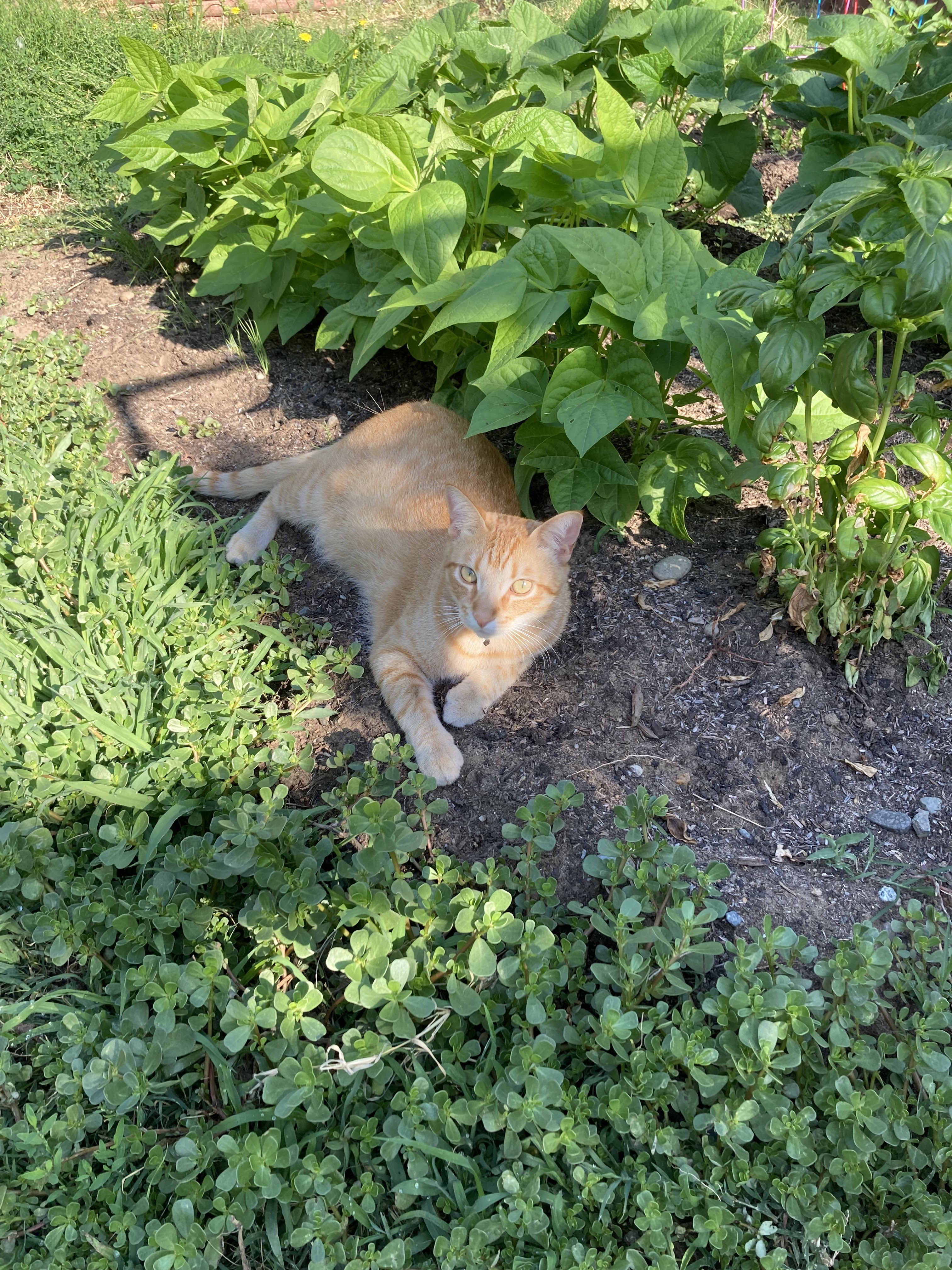
If you procrastinate with this work, as I do, the task at hand can be rather monumental I hate working in cold weather. I'd much rather stay inside, curled up with the heat brick known as Mango. The reliable rat hunter also seems to detest mud and cold as much as I do. This cat not only deters garden pests. He radiates enough heat to put a significant dent in winter heating bills.

At some point however, the gardening urge does begin to stir within me. The following missive is a method that I've developed over the past few years to prepare the backyard gardening area. I thought I would share this method of madness with you. Please do not misunderstand me, however. This is not the "right way" to prepare a gardening area. There is no "right way." Nor is there a "wrong way." It is "my way" and nothing more. Many people may find fault with this, or do things differently. That's fine by me. This is just my way of doing things and nothing more.

Rat Exterminator at Work
There was a time when I gardened extensively with raised beds that I built and maintained. Preparing raised beds for gardening use is MUCH easier. There was a point however, when I left those raised beds behind. If I was going to continue with this gardening adventure, all activity would take place the old fashioned way: in the clay dirt of a normal backyard. This forced me to develop a method that took a little more time to accomplish. But it also paid off with a unique gardening experience.

I can tell you that I have experienced a great deal of success with this method. You may experience the same type of success should you choose to emulate it. It is also a gardening or preparation method that greatly curtails the amount of weeds that pop up in the garden area. But, it does not eliminate them. The crab grass still makes its seasonal appearance. Several other "weed" varieties also seem to enjoy the garden prep and will announce their presence during the summer months. The only "weed elimination" strategy that seems to work for me is to dedicate a few minutes every morning of every day to find, locate and dig out the unwanted visitors.

Mantis Rototiller at Work
This weed elimination task isn't as difficult as it might sound. The weeds that do spring up are often quite easy to remove because they haven't had the time to develop tough and extensive root systems yet. This includes the dreaded crab grass.

I employ many tools during this method, but the biggest and best by far is the Mantis Rototiller. I consider the Mantis to be the best gardening investment I have ever made. This is the Mantis that is outfitted with the four cycle Honda engine. It is reliable. It is powerful. It starts immediately after a long and cold winter of zero activity. It cuts through heavy clay soil with ease. It also makes short work of pesky weeds with extensive root systems that have grown undisturbed through the winter months. I purchased this Mantis more than a decade ago, and it has yet to fail me.

Empty Garden Area with Weeds!
My method of garden preparation does not mean I put this tiller to work just once. It's not even used twice. It gets three or four turns in the garden area before the method of preparation is complete. I cannot imagine accomplishing this task without it, however. The Mantis doesn't replace all the hard work that must be done. But it does make it a tad easier. A turn with the Mantis will also leave your hands, arms and brains vibrating after an hour or two.

After I employ the trusty lawn mower and other garden tools to mow down a winter's worth of waste-high weeds, further weed elimination efforts take place in the garden area with the very handy and dandy weed whacker (also called a weed eater). I employ a normal shovel to dig out the tougher weeds like mallow, which also has a rather extensive and tough root system. There comes a point during this process where the garden area looks quite bare. Don't be fooled. The weeds are still there. They are just hidden by the dead material that the weed eater (whacker) and shovel efforts have already taken care of.

Mantis Tiller: Chop #1
That dead weed material isn't really dead though. In fact, it's just begging to be tilled right back into the garden area. I don't give into that weed wish. So, those chopped bits get raked out and cleaned up before I move forward. By the time I'm finished with this task, the ground is nearly bare dirt. It is at this point where I make a tough decision. Using any type of a garden tiller can be tough when the soil is dry following a dry spring. So, if it's needed, I put a sprinkler to work on that dirt patch for about 30-minutes. I let it sit overnight to let that water work its way in and help loosen the soil. This isn't always necessary. But water can play a key role in preparing the garden soil as long as it is used judiciously. Too much of anything can be a bad thing. Damp soil is the goal. Not a mud pit.

If the soil is right, it's time to put the Mantis tiller through it's first workout. This one is the toughest, on both machine and machine operator. I put it to work to till up a garden plot that hasn't been tilled for a year. That's a year's worth of soil compaction. Rows of last summer's tomato and pepper plants, cucumbers, herbs like basil, row vegetables plus walking paths tend to leave a lot of compacted debris behind. This is the big workout. The first chop usually takes the better part of an hour. The goal is a cut of at least six to eight inches in depth. This isn't all that difficult in a garden plot that has been tilled up the year before, but it still takes time and effort. This is the one workout that leaves you with vibrating hands, arms and brains.

The Dreaded Mallow
This first cut with the Mantis is the second step that I take to prepare my summer vegetable garden. Whether it's the toughest of all steps or not is a question that I will leave up to you. The six to eight inches of loose clay soil that contains plenty of compost thanks to previous gardening efforts is a good start. But, it's just that. A start. The job isn't finished. The big dig that takes place next will be outlined next in Part 2 of The Method.

Sunday, August 27, 2023

The Most Interesting Tomato Plant of the Month! August 2023

Weekend Haul (Partial)
I don't always grow tomato plants. Wait, that's a lie. I've been growing tomato plants every summer for 25-years straight. So, I guess my message to you should be: Grow Tomatoes, My Friends.

The photo to your immediate right? That represents my big weekend activity for the month of August. I'm either collecting ripe tomatoes to make gobs upon gobs of canned tomato sauce (with the bite of Jalapeño peppers I might add), OR I'm throwing them into bags and BEGGING my neighbors to take them.

This is the moment in August where heirloom tomato production is positively off the hook. It's not over yet. There are three times as many green tomatoes on the plants that I harvested from today than those that show the color of absolute peak heirloom ripeness. This means another month, or even two, of heirloom tomato harvests. This is, of course, provided the weather holds out.

Cold nights can screw up an heirloom tomato harvest. The tomatoes still turn a pleasing color of red, pink, yellow, orange or whatever variety you are choosing to grow. But sustained cool temperatures at night can play havoc with that heirloom taste.

Tomato of the Month
The nights, unfortunately, have been getting a bit cooler recently. It's not cold yet. But it's near the end of August, which means cold weather isn't very far off. It hasn't affected the taste yet. Today's serving of the giant pink monsters known as Marianna's Peace (MP) were positively off the hook. But, I do worry.

Although I could easily give the August title to MP, or any one of a number of other heirloom producers, I've saved this singular honor for a new variety that popped up in my garden this year. It's called Bread and Salt. It has been an absolute pleasure to grow and the production has been rather outstanding.

This is not a new variety. Not by any stretch of the imagination. It is somewhat new to the United States. But, in the heart of Mother Russia, this variety is well known. I can only tell you that the seeds for this variety did, in fact, come from Russia. I'm not sure exactly where, since this variety is apparently grown all over the Eastern European continent. I'm not at all surprised.

Bread and Salt
Bread and Salt is what tomato growers call an "oxheart" variety. It is a very large oxheart variety. How big? As big as my big, fat hand. Perhaps even bigger. I was blessed with two Bread and Salt starter plants this year. I gave one away and planted the other. I didn't give it much thought beyond that. I didn't know what to expect out of this variety because it's not one I had been expecting to receive as a starter plant.

This heirloom tomato variety may be called Bread and Salt. But it doesn't taste like that. The name, however, is symbolic. It is a Russian custom to provide gifts of bread and salt, which acts as a symbol of good health and fortune. A Bread and Salt variety grown in any fresh tomato garden is certainly going to bring those very good benefits. This is one good tomato. It's meaty. It's tasty. That zing of tartness is in every bite.

This plant doesn't get very large. Maybe four feet tall? That's the size of many standard determinate varieties. There's nothing wrong with determinate varieties. Any vine-ripened tomato is good eating. But most determinate varieties aren't worth writing home about in my opinion. Bread and Salt is different. My plant started producing in mid July and hasn't stopped. New tomatoes continue to form with every passing week, which means this plant won't play out until Mother Nature puts a stop to all summer garden production with one of her patented cold snaps.

Bread and Salt Tomato
I made sure to include a few ripened Bread and Salt whoppers in my canned tomato sauce creations this year. Bread and Salt tomatoes have found their way into more garden salads than I can count. I give as much of them away as I possibly can, without wearing out my welcome as a "good" neighbor. It's just one of those reliable heirloom varieties that you can count upon in any summer vegetable garden.

I can't make any promises, but it may show up in another future garden at some point. It certainly deserves another chance or two after the show this variety put on this year. I just thought you should know about it. It is, without a doubt, the most interesting tomato plant of the month!

Tuesday, November 22, 2022

The END!

The Cat and The RAT!
It is the end. Both literally and figuratively. It is the end of summer gardening season. And, if you look closely at the photo to your immediate right, it is also the end for that creature to the left of my ginger kitten.

I knew that this was going to happen at some point. There was going to come a time and day when Mango the Ginger Kitten was going to trap and catch a rat. That day came just the other day when I noticed this creature hanging from Mango's mouth as he proudly trotted by the back door leading to the backyard.

"That," I said to myself, "is a big, FAT, rat." I was immediately worried that Mango was headed for the garage door, which he can access to get inside the house and outside again. His intent, I thought at the time, was to haul that big, FAT, catch inside the house.

Captured Garden Raider
I took immediate action to make sure that wasn't going to happen.

As it turned out, Mango had no intention of hauling his catch inside the house. His intention was to prance around the yard for all to see and witness his hunting glory, before he dropped his catch on the backyard patio. You can guess what happened next.

I strongly suspected that rat didn't have much longer to live. My suspicion would turn out to be correct. I didn't watch what happened next, of course. That may be a rat. But it's also a living, breathing creature. I felt a bit sorry for the fate it would soon endure. But, nature is nature. You cannot and should not interrupt that process. I did not. When I returned to the french doors leading to the backyard garden an hour later, the deed was done.

Mango, of course, was very proud of his work. He chose to thank me for the care, love and cat food I provided for him during the summer by depositing a freshly harvested rat at the back door. I praised him for his work profusely, before depositing his "gift" into a sack. That sack went into the nearest outdoor trash can, leaving Mango free to prowl and hunt again. I do believe this was his first catch. I also believe it will not be his last. Not even close. He is just getting started.

The Mango
As badly as I feel for what happened to this rat, and the others who will join him, this was the plan. Mango was adopted from the Bradshaw Animal Shelter in Sacramento County in May for this exact purpose. A day after his adoption, this four-week old kitten was introduced to the trails I had created in the vegetable garden that I had planted just two short weeks earlier.

Mango turned out to be the solution I sought for years of rat raids in the garden. One tiny kitten is all it took to put an end to the misery of losing entire harvests to an army of voracious night-time raiders that gobbled up everything that I grew. Nothing else had worked. Rat traps got a few. But, trapping one rat didn't stop ten others from raiding the garden. The adoption of a Border Collie chased some away. But they just returned after the Border Collie went inside for the night.

The rats were not afraid. They returned. Night after night. Some nights they took a little. Other nights they took a lot. Waiting for a fat Brandywine tomato to ripen was a lesson in failure. No matter where it was on the vine, high up or down low on the bush, the rats always found it. Every morning revealed fresh damage.

End of Summer Garden Season
All of this damage, years of lost crops, came to an immediate end the moment that a four-week old kitten entered the garden last May. Everything stopped. The vegetables grew. They were not molested. Not one tomato. Not a single bell pepper. Even the bugs stayed away from the bush beans. There wasn't a single rat raid. Birds didn't risk a landing to peck at anything. Even the possums and skunks kept a healthy and respectful distance.

The result? By the end of this season, I was giving away as much as I could. I have a collection of pressure-canned tomato sauces and whole tomatoes. My neighbors received sacks of fresh produce. I even invited a few members from the Facebook gathering spot of Sacramento Gardening Group to drop by and take as much home as they could carry.

It was just that type of year. It's over now. Time to move on to the next garden challenge. Which is why there are piles and heaps of garden plants here and there. And, for each pile, there is a cat waiting to taste another opportunity.

<b>The Countdown IS On!</b>

HEAT BRICKS! It's January. It's COLD outside. If the high winds aren't whipping all the warmth from your gardening soul at the ...