Friday, February 17, 2023

The Snail Mail Garden News Release!

Boss Radio-KYNO Number 1
My career in radio news started at a Fresno radio station called KYNO. It was a legendary radio station that sat at the frequency of 1300 on the AM dial and would take on numerous nicknames during a fabulous five decade run. These would include the BIG 13, BOSS Radio and KYNO Number One to name a few.

By the time I finally graduated from CSU Fresno in the late 1980's, the legend and magic of the BIG 13 had largely died out. The BOSS Radio format had run it's course. Most people, including yours truly, listened to music on FM stations, not AM.

However, that would not stop me from becoming the last News Director to serve at the birthplace of Boss Radio.* The ghosts of legendary news men and women who proceeded me permeated that isolated newsroom. So did the nicotine pigment that resulted from decades of smoking inside that tiny closet of a room. By the time I arrived, those acoustic sound panels that lined the ceiling and walls had faded from a bright, shiny white to a stain of yellowish-brown.

KYNO-AM Newsroom**
Most of the snail mail that arrived at the KYNO studios during this period fell into my lap. News releases written by local, state and national organizations arrived every day. But, they were delivered in a state of flux. The world of communication rapidly changed during this period. News releases that once arrived by snail-mail would soon arrive by fax machine. Much later, those very same news releases would start to arrive via a new form of communication called email.***

Today, most news arrives via social media. Facebook, Instagram and Twitter pages serve this purpose. What will the primary tool of news delivery be in another decade or two? Your guess is as good as mine.

This brief history lesson does not mean that snail-mail news releases died along with my youthful looks or hair color (which is LONG GONE). They still serve a useful purpose and still manage to find a way into my mailbox, even though my days as a radio newsman ended long ago. The snail-mail reminder that most recently arrived was generated by a well known California seed company.

Media Kit: Renee's Garden
That company is called Renee's Garden. This company bills itself as "Your Garden to Table Seed Company." The release sent to me is titled the "2023 Media Kit."

What exactly is a media kit? It is usually more than one sheet or two sheets of paper, which would be the form of a traditional media or news release. The media kits that I prepared during a 20-year career at the California State Capitol usually included a one-page release, fact sheets consisting of two-to-three pages and a graphic creation of photos, print or both.

In this case? Renee's Garden has sent a very nice four-page glossy graphic creation that consists of garden photos and gardens that include numerous vegetables. Those photos include a glossy portrait of Founder Renee Shepherd and Elayne Takemoto, the Product and Marketing Manager at Renee's Garden.

What makes a media release like this stand out above all others? It's a freebie. Back in the days of KYNO Radio, we had a term for this. It was called "scrip." Scrip was kept behind lock and key in a place called the Prize Closet. The only employee who could unlock the coveted Prize Closet was the Promotions Director.**** In this case, Renee's Garden is pushing a new product: Climbing Zucchini. It's called the "Incredible Escalator," and this media release contains a packet of seeds for someone like me to sample and try out.

Seed Packet-Renee's Garden
This packet of seeds, which carries a retail price of $4.39, is described as follows: "Our unique, space-saving, climbing zucchini offers high yields of tender, delicious fruits." Do you know what that means? It means that if I plant these seeds somewhere, which I plan to do, my neighbors are going to receive surprise deliveries of zucchini later this summer.

I can only eat so much zucchini.

I am still intrigued about the idea, however. Vegetable plants that can climb a trellis or a nearby fence saves lots of garden space. The spot that would have been set aside for a zucchini bush can instead be replaced with corn, watermelons, bush beans, or, or, or (you name it). Fences can serve a great and useful purpose in the garden. Last year I used mine to dry a fantastic crop of large, pungent onions. It worked out better than I expected.

Climbing Zuccihini
Photos provided by Renee's Garden website appear to show that this variety of zucchini does appear to grow tendrils similar to other climbing vegetable plants. Those tendrils, in turn, wrap around whatever they can find to give the zucchini plant more room to grow up rather than out.

This seems like a good idea to me. Some gardening efforts are experimental. I love trying new stuff in every summer vegetable garden. I'm looking forward to the results. This also includes the payoff of zucchini sliced lengthwise, covered with olive oil and salt, and grilled during a traditional summer barbecue.


*BOSS Radio was a unique format developed at KYNO-AM Radio. Local legend has it that the format was scratched out on the back of a cocktail napkin at the bar located inside the Cedar Lanes Bowling Alley, near the KYNO studios on Barton Avenue in Fresno. This was a modification of the Top 40 format that relied upon fewer records, shorter jingles, less talk from DJ's and a heavier rotation of the biggest hits. The format was a hit and spread to KFRC in San Francisco, KHJ in Los Angeles, KGB in San Diego, WRKO in Boston, CKLW in Windsor, Ontario and numerous other smaller market stations. The format would make several DJ's famous. The names include Dr. Don Rose, the Real Don Steele, Dave Diamond and Robert W. Morgan (to name a few).

**That is yours truly in the original newsroom of the legendary KYNO-AM. Pictured with me is my cousin: Karen Doran. This picture was taken in 1990 or 1991, after KYNO-FM had switched call signs to KJFX and adopted the Classic Rock format that airs on this station to this very day. Karen would meet the love of her life, Tim, some years later and take the name of Van Overen. She is the mother to three great kids, including my Godson, Jon Paul.

***The former KYNO Radio studios on Barton Ave. in Fresno is now home to Punjabi Radio USA. KYNO would later move to the 940 frequency on the AM Radio dial. Today, the station is owned by John and Katrina Ostlund. KYNO studios are currently located on Fulton Ave. in Fresno.

****I have fond memories of the KYNO Prize Closet, the valuable Scrip it held, and always made sure to treat the Promotions Director with great respect. This treatment resulted in hundreds of free pizza coupons from a variety of restaurants. It also meant free meals at select restaurants. To this day I cannot even touch food products like Pringles Potato Chips and Entenmann's Doughnuts because I subjected my stomach to the abuse of eating a never-ending supply of these products for a number of years. One restaurant that served excellent Mexican fare stands out in my mind, however. Paulita's Cocina (now closed) is where I would meet a young waitress, who was working her way through college. I later had the pleasure of working with this young lady after I moved to another radio station years later. Today this young lady works as a News Producer at a Sacramento TV station.

Tuesday, February 14, 2023

Valentine's Day!

Garden Fresh Chow Mein
The best Valentine's Day gift is not chocolate. This may be depressing news to a friend who confided in a whisper to me last weekend that it was her favorite gift. I didn't want to burst her bubble. My favorite Valentine's Day gift is pictured to the immediate right. Can you spot it?

If that looks like a dish of homemade chow mein, points to you. That's exactly what it is. But that particular dish isn't the favored gift. It's what's in that dish. Look closely. Can you spot it? That dish contains two-three elements from my spring and summer gardening exploits. It's the garden that keeps on giving. Even in the dead of winter as I plan out the next spring and summer garden efforts, the 2022 garden is still paying off.

Dixondale Farms Onions
That garden gift is one of three vegetable packs that I prepared at the close of last summer's gardening efforts. Those packs include two chopped onions, courtsey of Dixondale Farmsthe largest grower of onion plants in the USA. The packs also include anywhere from two-to-four chopped bell peppers and one or two chopped jalapeño peppers (seeds included), to give the finished creation a little kick. The packs also include the leaves produced by a prolific summer basil plant.

The creation of these winter packs is a fairly simple operation, but it does require a bit of time in the kitchen. This is where the process starts. The largest onions, which were hung to dry on a fence after a July harvest, are selected. So are the largest peppers. By late August and September, these bell peppers have taken on a pleasing red, orange or yellow hue. The jalapeño peppers are a bright red at this point in the summer garden season and are as spicy (hot) as they are going to get.

Summer Garden Peppers
Jalapeños 
are not the hottest peppers you can grow in the garden. But they are the best tasting in my humble opinion. The hotter peppers, which all grow well in this California climate, tend to be a tad bitter. This is all personal opinion, of course. There are hot pepper afficiandos who love the taste and jolt that comes from biting into a freshly harvested Ghost, Scorpion or Habanero flamethrower. That's just never been my style. To each his own.

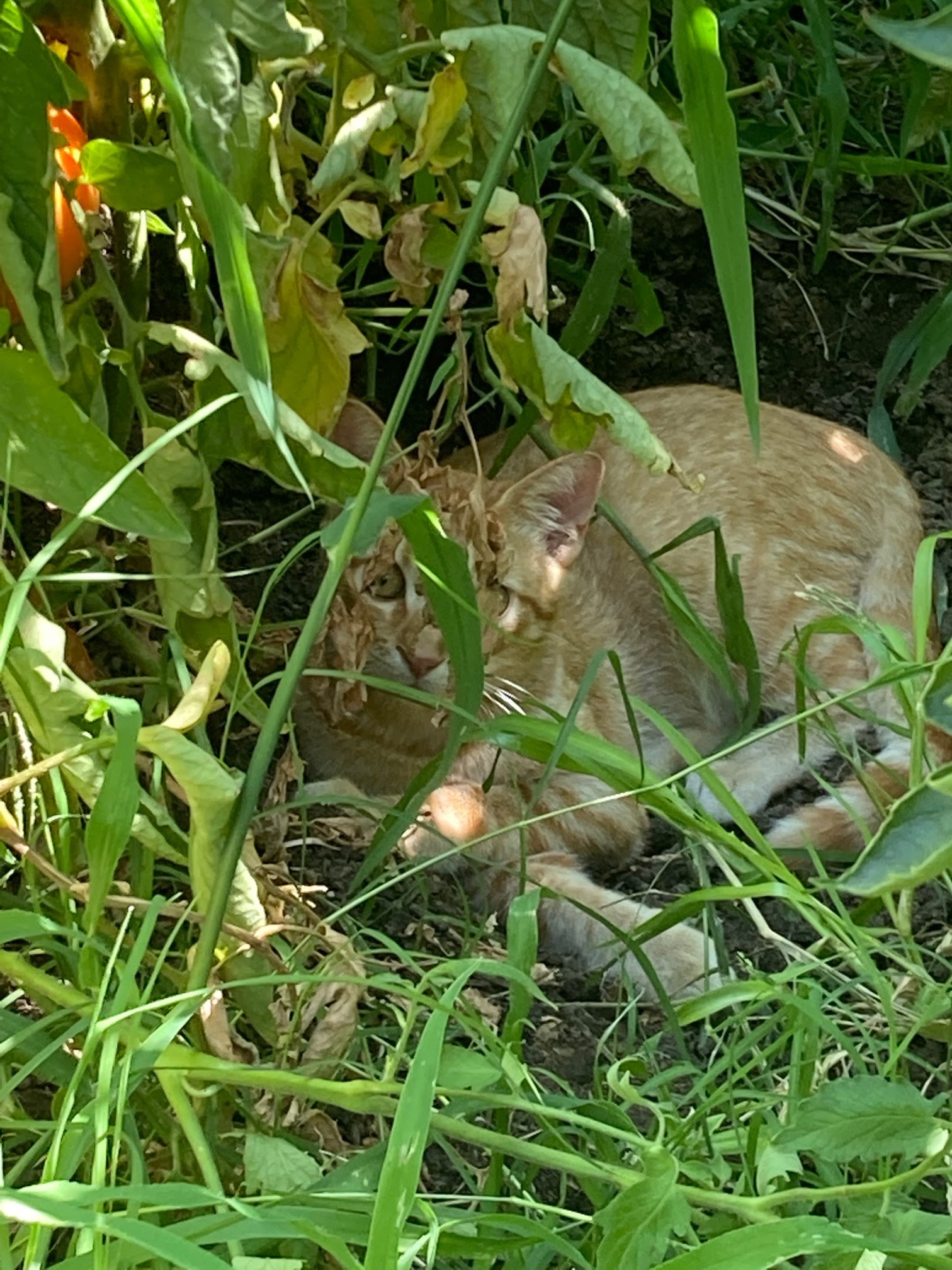
Jalapeño peppers also tend to be the most prolific and easy to grow, which means I can hand out scads of them to neighbors and friends who love the jolt of summer garden heat. There were a lot to give away this past summer, thanks to the garden patrol efforts of a legendary kitten known as "The Mango." I've come to discover that the kitten I adopted from the Bradshaw Animal Shelter in Sacramento County last May not only chased a voracious army of rats out of my garden this past summer, he apparently did a lot more. Neighbors have confided in me that "The Mango" took this hunt into other yards with vegetable gardens, fruit trees, or both.

The Chop!
I did not receive any complaints about these visits. The neighbors loved these well-timed events. The army of rats that once feasted on these summer gardens did not. The end result was a string of successful garden efforts in every yard "The Mango" patrolled.

A food processor aided with the end-of-season chopping effort. The end result went into one-quart bags that went straight into the freezer. I have used two of these bags so far. I will most likely use the third at some point later this month or in March. The bagged peppers, hot peppers, onions and basil are perfect for stir fry dishes, soups, chili or any other dish complimented by summer gardening efforts. The only drawback will come when I finish off the last bag and wish I'd created a fourth or fifth chopped summer garden effort.

Finished Freezer Pack
Three is never enough.

There is a down side to preparing fresh summer vegetables that are chopped and frozen for future use. You do lose that fabulous crunch. But that signature smell of a summer vegetable garden is never too far away. Which is a nice thing to have in the kitchen on a cold and wet winter day.

Tuesday, November 22, 2022

The END!

The Cat and The RAT!
It is the end. Both literally and figuratively. It is the end of summer gardening season. And, if you look closely at the photo to your immediate right, it is also the end for that creature to the left of my ginger kitten.

I knew that this was going to happen at some point. There was going to come a time and day when Mango the Ginger Kitten was going to trap and catch a rat. That day came just the other day when I noticed this creature hanging from Mango's mouth as he proudly trotted by the back door leading to the backyard.

"That," I said to myself, "is a big, FAT, rat." I was immediately worried that Mango was headed for the garage door, which he can access to get inside the house and outside again. His intent, I thought at the time, was to haul that big, FAT, catch inside the house.

Captured Garden Raider
I took immediate action to make sure that wasn't going to happen.

As it turned out, Mango had no intention of hauling his catch inside the house. His intention was to prance around the yard for all to see and witness his hunting glory, before he dropped his catch on the backyard patio. You can guess what happened next.

I strongly suspected that rat didn't have much longer to live. My suspicion would turn out to be correct. I didn't watch what happened next, of course. That may be a rat. But it's also a living, breathing creature. I felt a bit sorry for the fate it would soon endure. But, nature is nature. You cannot and should not interrupt that process. I did not. When I returned to the french doors leading to the backyard garden an hour later, the deed was done.

Mango, of course, was very proud of his work. He chose to thank me for the care, love and cat food I provided for him during the summer by depositing a freshly harvested rat at the back door. I praised him for his work profusely, before depositing his "gift" into a sack. That sack went into the nearest outdoor trash can, leaving Mango free to prowl and hunt again. I do believe this was his first catch. I also believe it will not be his last. Not even close. He is just getting started.

The Mango
As badly as I feel for what happened to this rat, and the others who will join him, this was the plan. Mango was adopted from the Bradshaw Animal Shelter in Sacramento County in May for this exact purpose. A day after his adoption, this four-week old kitten was introduced to the trails I had created in the vegetable garden that I had planted just two short weeks earlier.

Mango turned out to be the solution I sought for years of rat raids in the garden. One tiny kitten is all it took to put an end to the misery of losing entire harvests to an army of voracious night-time raiders that gobbled up everything that I grew. Nothing else had worked. Rat traps got a few. But, trapping one rat didn't stop ten others from raiding the garden. The adoption of a Border Collie chased some away. But they just returned after the Border Collie went inside for the night.

The rats were not afraid. They returned. Night after night. Some nights they took a little. Other nights they took a lot. Waiting for a fat Brandywine tomato to ripen was a lesson in failure. No matter where it was on the vine, high up or down low on the bush, the rats always found it. Every morning revealed fresh damage.

End of Summer Garden Season
All of this damage, years of lost crops, came to an immediate end the moment that a four-week old kitten entered the garden last May. Everything stopped. The vegetables grew. They were not molested. Not one tomato. Not a single bell pepper. Even the bugs stayed away from the bush beans. There wasn't a single rat raid. Birds didn't risk a landing to peck at anything. Even the possums and skunks kept a healthy and respectful distance.

The result? By the end of this season, I was giving away as much as I could. I have a collection of pressure-canned tomato sauces and whole tomatoes. My neighbors received sacks of fresh produce. I even invited a few members from the Facebook gathering spot of Sacramento Gardening Group to drop by and take as much home as they could carry.

It was just that type of year. It's over now. Time to move on to the next garden challenge. Which is why there are piles and heaps of garden plants here and there. And, for each pile, there is a cat waiting to taste another opportunity.

Sunday, September 4, 2022

The Most Interesting Tomato Plant of the Month! September!

Tomato Plant of the Month
I don't always grow tomatoes. But when I do? I grow some very strange plants that cannot be identified. This is what it is like to grow your own tomato garden, my friends. Sometimes you know what you are growing. Other efforts are complete surprises. That is the story behind the Tomato Plant of the Month for the month of September. I cannot begin to tell you what variety it is.

I've chosen this one plant for a reason. The picture located above right is an example of the harvest from this one plant. That is not the total harvest. It is just the harvest that came off this one plant on the day I took this picture. That's why I took the picture to be completely honest. This one plant, the plant of the month, has been churning out round and red tomatoes since early July. It is still churning out tomatoes in the month of September. I could have taken five more photos of the daily harvests from this one plant, but WHY?

Mystery Plant
I can tell you one or two things about the September Tomato Plant of the Month. It is not what tomato growers call a "Determinate" tomato variety. This list comprises a small number of varieties. They are marketed under names like Early Girl or Better Boy and a few others. These types of "Determinate" varieties, which also include some types of Roma or Paste tomatoes, will usually result in one large harvest. The plant might spit out a few more tomatoes as the season progresses, but the idea behind "Determinate" plants is one big harvest.

Indeterminate plants, which are also known as "heirlooms," are different. They will also produce one big harvest. They will also produce a second big harvest. If you're lucky, you might even receive a third big harvest. Indeterminate, or heirloom, plants take a bit longer to ripen than the determinate varieties. But, the advantage is they don't stop producing. They will keep forming new tomatoes throughout the growing season. I live in California. The tomato growing season here can be very long. It can start as early as March and keep right on going until the Thanksgiving holiday arrives in late November.

Plant of the Month
As much as I would like to tell you the name of this variety, I cannot. This is due to a gardening "accident" that took place earlier this year. The seedling plants that I received had been scattered about due to this accident. Which means every plant was a complete and total mystery. As these plants started to grow and produce ripened tomatoes, I could correctly guess the names of some varieties. The "Lemon Boy" variety was easy to spot because those tomatoes turn yellow when ripe. I could also spot the Kellogg's Breakfast plant, because those tomatoes ripen into a pleasing shade of orange.

However, most tomato plants produce round and red tomatoes. The vast majority of the tomatoes in this year's garden produced round and red tomatoes. How can you tell them apart? The short answer is: you cannot. You just enjoy them. You turn them into a lot of tomato sauce or canned tomatoes. You give them away to friends and neighbors. That is what I've been doing with the tomatoes from the September plant of the month since July. It started to produce early. It is still producing in September. It may keep right on producing through the months of October and November. I really don't know.

Tomato Sauce Project
I have been fortunate (lucky) enough to grow some varieties that have been as productive as this one plant has been. The variety known as Druzba comes to mind. Druzba is an heirloom that came to America from Bulgaria. This variety also produces a ridiculous amount of red and round tomatoes throughout the growing season. This variety produces tomatoes that ripen early. It also produces tomatoes that will ripen in November, provided the weather cooperates. But, the September Tomato Plant of the Month is not a Druzba. How do I know this? Because my tomato growing buddy who provided me with starter plants during spring planting efforts did not plant Druzba seeds.

So, while this plant may act like a Druzba, it is not a Druzba.

I suppose the name of this plant could also be Prarie Fire, Bella Trix, Say Brook or Original Blue Ribbon. These are varieties that produce red and round tomatoes. These are also seeds that my tomato growing friend DID plant. So, I suppose it could be one of these. Except, all of these varieties are listed as Determinate. This means one big crop of red and round tomatoes and not much else. That doesn't match what I'm growing.

Lots of green tomatoes
The bottom line is I'll never really know for sure. But it really doesn't matter. Because backyard tomato growers pray for production like this. It's a non-stop harvest so ridiculously large that you will never eat them all. You need help.

Thank goodness I have friends and family that love vine-ripened garden tomatoes as much as I do.

Grow Tomatoes, My Friends.

Thursday, August 25, 2022

The HAUL

Heirloom Tomato Haul
I haven't been blessed like this for a very long time. Not since my gardens were located in North Natomas and I was using a different blog from a past lifetime. The haul of tomatoes, peppers, onions and basil currently coming out of the Citrus Heights garden is one for the ages.

The photo you see pictured to your right is just one part of it. I picked this for a canning project last weekend. This sink full of ripe heirloom tomatoes came from approximately half of the plants in the garden. I'm still harvesting from the other half that didn't get touched, hoping that my neighbors don't get tired of my never-ending gifts of vine ripened tomatoes.

I've stopped waiting for the 101st Airborne Rat Army to show up. It's nearly September now. In the past two or three years, this garden would have been decimated from top to bottom by now. Every tomato still on the vine would be damaged with large and disgusting chunks in the shape of large, sharp rat teeth. It was impossible to walk down the garden rows, unless you enjoy rats suddenly zipping across your shoes as this walk interruped their non-stop feeding regimen and garden destruction habits. It was really something to experience. Depressing too.

Single Plant Harvest
But the introduction of "The Mango" as my neighbors now call him (they did name him, after all), has meant all the difference in the world. I kept waiting for weeks on end for the 101st Airborne Rat Army to parachute in on any given night and lay claim to the ripening heirloom tomato crop. They never did. Not with The Mango, my tiny orange rescue kitten from the Bradshaw Animal Shelter, now patrolling the garden area.

His presence has resulted in what is pictured above left. That isn't a harvest from my heirloom plants. That's from ONE plant. Plus, that is just the harvest from that ONE plant on the day this picture was taken. I've been pulling tomatoes off this ONE plant for weeks. It's still loaded with tomatoes that are still green at the moment. Which means another monster harvest from this ONE plant is coming soon.

Processing Tomatoes
So, with heirloom tomatoes literally coming out of my ears, it was time to put some old gardening tools to work again. This would result in a project I had not undertaken for nearly a decade. I would turn a sink full of vine-ripened heirloom tomatoes, garden bell peppers and jalapeño peppers, garden grown onions and basil, and turn it into as many jars of spicy tomato sauce as I could get.

This was an all-day job for two people a decade ago. I'm alone now. I wouldn't be all that surprised if this job took me more than a full day. That did happen, but only because I ran out of canning jars and the all important canning jar lids. The lids are the one thing you cannot recycle. Once they've been used, you cannot use them again.

Simmering Sauce
I'm not sure why I chose to hang onto all of the old garden canning equipment when I found myself living alone again. Anyone who has been through this experience, and a lot of us have, will find themselves throwing away a lot of old and unpleasant memories. This I did through the years, but I kept the old water-bath and pressure-canning equipment sitting on a shelf in the garage. It had gathered a fine layer of dirt and dust through all those years of inactivity. But you know what? You can wash the dirt off. You can enjoy life again.

Turning a sink full of heirloom tomatoes and peppers into jars of spicy tomato sauce is a fairly simple task once you've done this a few times. The first step is to wash and core the fruit. It's then cut into chunks and liquified in a food processor. The amounts are then measured and added to a large pot. Once everything is added, you bring the mixture to a boil and let it simmer.

The Payoff
I wanted a thicker sauce this time. So, rather than just one hour of a hard simmer, I kept it going for two. It's useless to keep an air conditioning unit working during a project like this because the heat coming out of the kitchen is fairly intense. Of course I would choose the hottest day of 2022 to take on such a project. That only makes sense. I had forgotten about the kind of heat that comes out of a kitchen when a pressure canning unit is hard at work.

The end result is 13-pints and three quarts of the thickest sauce I've ever created. Do you really think I'm going to consume this much heirloom tomato sauce during the winter? Are you insane? That's what neighbors are for. The same neighborhood children who gifted my orange rescue kitten with the name of "The Mango" will get to enjoy the results of his non-stop garden patrol efforts.

The Mango
If "The Mango" enjoyed tomato sauce he would most certainly get his fair share. After all, he earned it. But, he's more than content with his kitten kibble. The only snack he seems to enjoy is the ocassional bug he hauls in from the backyard. This is one garden assassin who works cheap.

Sunday, August 14, 2022

The Most Interesting Tomato Plant of the Month! August

Garden Protector at Work
I don't always grow tomatoes. But when I do, I grow the fattest, most colorful and tastiest of heiroom tomatoes! And this year, thanks to that creature pictured to the right, I'm enjoying a banner harvest for the first time in years.

That's right! Heirloom tomato season is now officially underway in these parts. The plants are literally producing so many tomatoes at the moment that I'm literally begging neighbors to take them from me.

In the past, I might have tried to can some of this bounty for winter use. I do have recipes for numerous tomato sauces. I've done it before. But, so far, the energy just eludes me. Most of my time is spent harvesting, packaging and delivering this enormous haul to neighbors here, there and everywhere.

Kellogg's Breakfast
Which brings us to the most interesting tomato plant of the month. It's August. This is the month of heirloom tomato production in California. In past years? An army of rats would have decimated this garden by now. The only pictures that I could show at this point in the garden season were photos of heirloom tomatoes that were half eaten, covered with aphids and other bugs, and just plain spoiled.

But that isn't the case in 2022. Mango, the kitten rescue procured from the Sacramento Bradshaw Shelter has somehow managed to keep the ravenous rat army, every last one of them, at bay. I haven't lost a single tomato to a rat raid. There are no rat raids. No other wildlife raids either. The creatures who feasted on previous garden efforts last year, the year before that and even the year before that, are avoiding the garden like it's some sort of plague.

Which is just fine by me.

1.5 lbs.!
The most interesting tomato plant of the month is a variety I've grown before, but never enjoyed the bounty of a harvest like this one. This variety is called Kellogg's Breakfast. It is considered to be one of the finest open-pollinated tomato plants ever developed. It received it's name, not from the makers of Kellogg's Breakfast Cereals, but a railroad supervisor by the name of Darrell Kellogg.

This variety hails from West Virginia, but Kellogg helped to popularize it from his gardens located in Redford, Michigan. The food editors at Sunset Magazine declared it as one of the best heirloom tomato varieties ever developed, and legendary heirloom grower Carolyn Male made sure to list Kellogg's Breakfast in her time-honored garden bible called 100 Heirloom Tomatoes for the American Garden.

Heirloom Tomatoes
This variety was christined with the name of "breakfast tomato" because of its unique and outstanding orange flesh and orange colored juice. It is simply one of the sweetest varieties you will ever have the pleasure of tasting, and just one of these tomatoes can fill up a standard serving bowl once it's been sliced into delicious, mouthwatering chunks. It's also a favored slicing tomato that's been known to cover more than a few Bacon, Lettuce and Tomato sandwiches.

Kellogg's Breakfast is one of those few late-season rewards that heirloom tomato growers dream about all winter and spring. The season is never quite long enough, no matter how productive the plant might be. These fruits easily top 1 lb. and a few might even tip the scales at 2 lbs. or more. It's not a perfectly round tomato. No heirloom really is. Most heirloom tomatoes look like garden nightmares. Kellogg's Breakfast is no different. It's lumpy, bumpy and just plain good.

YUM!
The garden is producing lots of tomatoes like this at the moment. So much so that choosing a "tomato variety of the month" proved to be difficult. There are others in that garden of mine who are attempting to knock Kellogg's Breakfast off its lofty perch, but that is a tough task for an heirloom delicacy like this one.

Grow Tomatoes, my friends.

Thursday, August 4, 2022

KOMPOT!

Bandit and Mango
I must admit that it has been a very nice experience to live right next door to a husband and wife who were born in Ukraine. They both arrived in California decades ago as young children. They were immigrants in what must have been a strange new world for them. But, they adapted. They grew up. They met, they fell in love, got married and started a family. This journey came to my attention when they purchased the home next door some years ago.

I couldn't ask for better neighbors. Sometimes I feel like I've won a lottery of life. The children from this marriage have been called upon, or put to work so to say, to name the beasts that are pictured above. Both cat and dog were procured from the Bradshaw Animal Shelter in Sacramento County. The dog, a Border Collie, was christened with the name of Bandit. The kitten received the title of Mango.

Recent Tomato Haul
I've come to learn that this family loves the produce that comes from the over-sized gardens that I plant every spring. I always make the mistake of planting far too much than I could ever consume, which means the multitudes of tomatoes, squash, peppers, onions and other garden goodies are always searching for a home. They have found a home next door (and elsewhere).

They have also been introduced to the tree-ripened delight of Black Mission figs. I first experienced this delight last year when the tree I planted three years ago suddenly delivered a small crop of fruit. Although I've planted and nurtured a multitude of fruit trees, this would be my first experience with tree-ripened figs. Oh my! I can begin to understand now why figs were, at one time, the most widely planted of all fruit trees in California.

Black Mission Fig Tree
The crop that is coming off the tree this summer can be described in many ways. But, the word "small" is not one of them. Dozens of figs are now ripe for the picking every single day. While I always enjoy five or six pieces of daily, tree-ripened fruit, the dozens that are coming off the tree right now are a bit much. They have found a home next door, across the street, down the block and even at a local dog park where Bandit can terrorize other dogs and dog owners.

It is this gift of fruit, plus other summer garden produce, that resulted in the discovery of an old Russian and Ukrainian heirloom recipe. It's called Kompot (Kohm-Poat). It's a simple way of using a lot of tree or bush-ripened fruit to make a fresh and natural fruit juice that is out of this world GOOD.

Black Mission Figs
I suppose you could call this the old-fashioned way of making Kool-Aid. It's just much healthier. It's also much, much better.

The introduction to this crazy-good concoction made a surprise appearance at my front door the other day. It was a gift from my Ukrainian neighbors. This particular Kompot was made with strawberries and blueberries. I instantly fell in love with it. I'd never tasted anything like it. I would come to learn that Kompot can be made with any combination of tree-ripened fruit. Or, it can be made with just one type of tree-ripened fruit.

Like, Black Mission figs, for example.

Making Kompot
The glass jug that my neighbors of Ukrainian descent used to introduce me to the wonders of Kompot would be returned two days later. That's how long it took me to drink a quart of strawberry and blueberry Kompot. It was that good. But, this jar would not be returned empty. It was cleaned and filled again. It would be returned with a Black Mission fig mixture of Kompot.

If one were to cast votes on this matter, I would personally choose the Kompot that came out of the neighbor's kitchen. That combination of strawberries and blueberries was truly something special. I wish I could share that taste with you. It is out of this world good.

Black Mission Fig Kompot
But, other people also get to cast votes in this election. It's a split decision. The neighbors who introduced me to Kompot claim they like my Mission Black fig creation just a tad better.

You can't ask for better neighbors. You really can't.

This is the recipe I used to make my own version of Black Mission fig Kompot. I also modified it a tad, so I've listed it below. Although this is a recipe that I used to create Kompot from Black Mission figs, any fruit can be substituted.

This is the month of August in California. What California fruit ripens during the month of August? EVERYTHING!

Have fun!

Black Mission Fig Kompot
-25 soft to the touch, tree-ripened Black Mission figs
-1.5 gallons water
-1 to 1.5 cups sugar (depending upon how sweet you want it)

Directions:
-Cut figs into quarters and set aside
-Fill a large pot with 1.5 gallons of water and bring to a boil
-Add quartered figs and return to a boil
-Reduce heat to a simmer. Do not cover pot
-Simmer for 30-45 minutes.
-Turn stove off after simmering is complete. Add sugar to water and fruit. Stir to mix. I covered the pot and let this mixture sit overnight.
-Straining the fruit from the liquid is tricky. I just dumped the entire concoction into a plastic one gallon jug. I used a colander to strain the juice into two half gallon jugs. Seeds from the figs do pass through, but I didn't mind. If you want a clearer fruit juice, minus the seeds, you can place cheesecloth into the colander during the straining process.

The left-over fruit used from creating this mixture is also very tasty. It can also be used in another dish called Kissel. This recipe comes courtesy of Natasha's Kitchen. Scroll past the Kompot recipe to access the instructions for Kissel.

<b>The Countdown IS On!</b>

HEAT BRICKS! It's January. It's COLD outside. If the high winds aren't whipping all the warmth from your gardening soul at the ...